
风云
India, Sweden join hands for green transition_我的网站

一 |
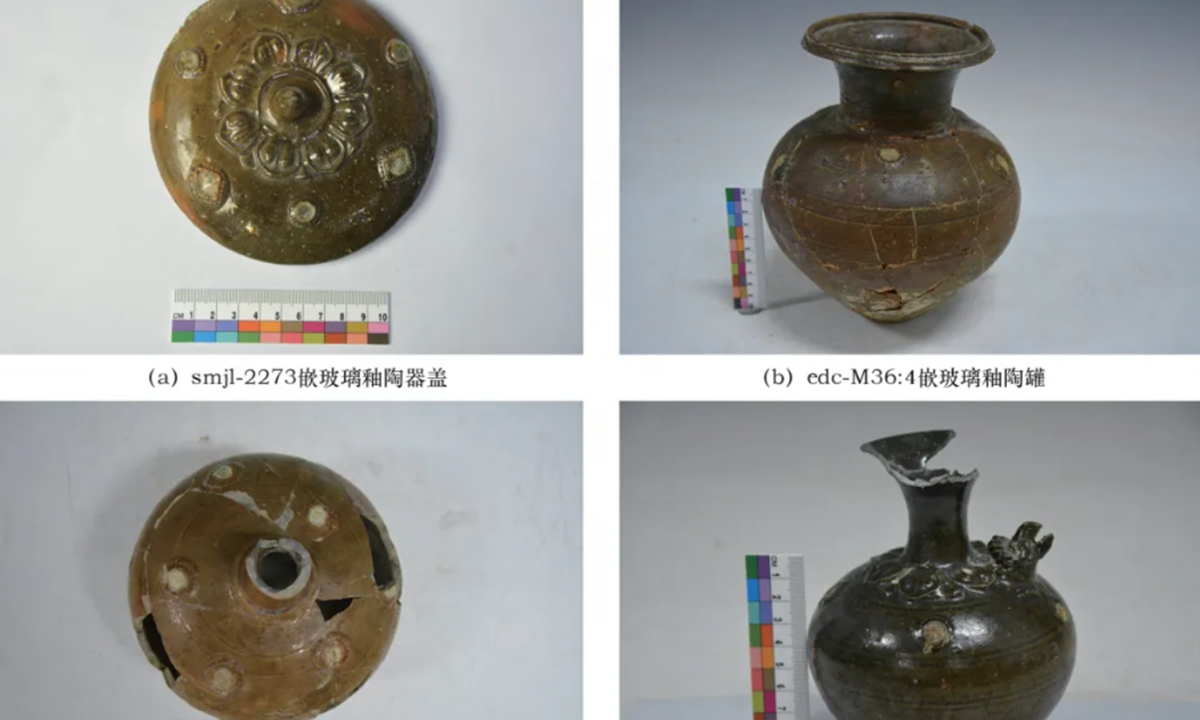
Systematic analysis conducted by the institute of pottery wares dating back to the Pingcheng period of the Northern Wei Dynasty (386-534) has identified distinct foreign cultural and technological elements embedded in the craftsmanship and material composition of the unique artifacts, shedding fresh light on ancient Eurasian cultural integration.
Established by the Tuoba Xianbei ethnic group, the Northern Wei Dynasty designated Pingcheng, present-day Datong city in Shanxi Province, as its capital from 398 to 494. For nearly a century, the city served as a pivotal multicultural hub where Xianbei nomadic culture, Central Plains Han culture and diverse Western Regions civilizations converged and interacted, according to a report on Chinanews.com.cn.
Archaeological excavations at multiple tomb clusters in Pingcheng, including the Dongxin Northern Wei cemetery and the Qilicun cemetery, have yielded a total of eight pieces of glass-inlaid glazed pottery. Though far fewer in number compared with common glazed pottery figurines and painted glazed wares, these artifacts feature an extremely rare inlay technique unseen elsewhere in the developmental history of Chinese ceramics, according to the press release.
Given the exceptional rarity and good preservation of the relics, researchers selected four representative pieces for comprehensive laboratory testing and material analysis. The results show that the glass inlays are primarily soda-alumina glass, most likely produced by remelting trade beads from the Indian Ocean and Pacific regions, a key commodity in ancient maritime and overland trade networks.
The findings confirm that Pingcheng maintained frequent cross-border trade and cultural communication during the Northern Wei era, with access to glass raw materials sourced from diverse overseas regions. The varied compositional characteristics of the inlaid glass provide crucial clues for studying ancient glass-making technologies, raw material circulation and long-distance trade routes in ancient East Asia, the press release noted.
Beyond material composition, the artifacts also embody prominent cross-cultural innovation in design. Their decorative motifs draw heavily on gem-encrusted gold and silver wares of the Sasanian Persian Empire, while integrating artistic elements from other Eurasian regions. The blended design styles reflect the era's prevailing trend of multicultural fusion and creative assimilation of foreign civilizations.
Archaeologists noted that the glass-inlaid glazed pottery represents an innovative technological achievement crafted by Northern Wei artisans who absorbed and refined foreign techniques and aesthetics. The distinctive craftsmanship and stylistic features of these wares exerted a far-reaching influence on ceramic production in surrounding regions and subsequent dynasties, marking a vital chapter in the evolution of ancient Chinese ceramic art.
The research underscores that ancient China's northern borderland was not an isolated cultural enclave, but an active node in Eurasian cultural and trade exchanges, where foreign elements were localized and innovated to form unique regional civilizational achievements, archaeologists from the Shanxi Provincial Institute of Archaeology said.
。 New Delhi, Oct 18 (UNI) Strengthening mutual commitment to drive prosperity and address global challenges like climate change, India and Sweden have joined hands to accelerate the green transition via Innovation through the India Sweden Innovation Partnership.
The partnership builds upon the joint statement between Prime Ministers of India and Sweden issued in Mumbai 2016, the Joint Action Plan agreed in Stockholm in 2018 and the India-Sweden Virtual Summit on the 5th of March 2021, an official statement said on Tuesday.
The strategic partnership will be further accelerated with a focus on green transition on 9th India Sweden Innovation Day on October 27, 2022, the statement said.
The collaboration is established on the principles of co-funding, co-development, co-creation towards mutual benefits, and making full use of complementary strengths, the statement added.
Robin Sukhia, President, Sweden-India Business Council (SIBC) said, 'India and Sweden jointly unveiled the Leadership Group for Industry Transition (LeadIT) in 2019 and share the common objective of ensuring sustainable industrial development and addressing climate change. The India Sweden Innovation day is the next step forward in this direction to bolster government and industry cooperation between the two nations to harness emerging opportunities and foster technological innovation.'
Tanmaya Lal, Ambassador of India to Sweden and Latvia, said, 'Accelerating an inclusive green transition is the key to our collective sustainable future. Collaborations for innovative solutions for meeting global challenges through climate action, inclusive development and public health by co-developing clean technologies, smart grids, circular economy and healthcare are at the heart of India Sweden Innovation partnership.'
UNI AKM SHK1835。
Current article:http://528j.banhuannunuluchuaiguangenru.sbs/list_6c9a4f/nb5r00.html
Published on:16:00:26
相关新闻
最后更新
- 广东兴宁市大坪镇性侵案已移送检察机关
- 九月德比燃岭南!2026职业男篮挑战赛重磅来袭
- 海马课堂网络科技大连有限公司虚假宣传,诱骗
- Tanzania signs a port management deal with Dubai-based company despite protests
- 四川南充:“十五五”规上工业总产值锚定翻番 加快建成省域经济副中心,四川南充:“十五五”规上工业总产值锚定翻番 加快建成省域经济副中心
- 漳州车务段启动防洪防台风应急响应
- 中国电影:上半年净亏损1.1亿元
- US Challenges China's Influence Over Pacific Island Countries, But Does It Have Much to Offer?
- 浙江提升防台风应急响应至Ⅲ级
- 一口价8.99万起/还可叠加至高2万国家补贴 MG ES5推出限时补贴
热门新闻
- 任天堂公布首批 Switch 2 同捆套装,将于 9 月主机涨价后上市
- [데일리안 오늘뉴스 종합] 네팔 홍수, 외국인 291명 등 384명 소재불명…최소 9명 사망, 경찰 "장미란씨, 5월13일 새벽 사망 추정…모든 가능성 열어두고 수사"
- 中际旭创:2027年1.6T和800G的订单需求相较2026年仍保持快速增长 产品价格降幅相对理性
- 京东客服机械回应,拒不处理学生退息
- 科创50指数跌幅扩大至2%
- 过去五年车牌盗窃案大增,去年9000多个车牌被盗
- 2026年第5场全国桥牌通讯赛圆满完成
- 【阳光•假期】元旦放假通知——沈北新区第三幼儿园
- 热议U18男篮惜败澳大利亚:裁判连续抢戏惹争议 媒体人评论一边倒
- 《大航海时代:凯旋航线》首测收官在即,明晚直播共话新航程